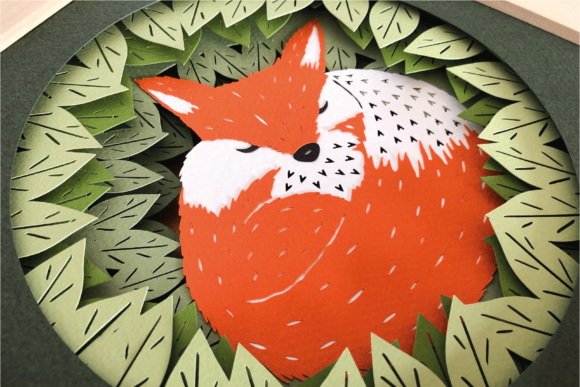
Sleepy Fox - 3D Paper Art Shadow Box: A Creative Addition to Your Crafting Workflow
Whether you're a seasoned crafter or a beginner looking to explore a new creative outlet, the Sleepy Fox - 3D Paper Art Shadow Box offers a unique way to blend digital design with hands-on making. This charming paper art project is more than just a decorative item—it’s a versatile tool that can be integrated into various creative workflows, from personal crafting to small business product development. With its layered design and compatibility with both hand-cutting and electronic cutting machines, this shadow box bridges the gap between digital planning and physical execution.
Understanding the Sleepy Fox Shadow Box Design
The Sleepy Fox design is a pre-structured 3D paper art template that allows you to create a shadow box featuring a whimsical fox resting in a forest-like setting. The package includes multiple file formats—DXF, SVG, PNG, EPS, and PDF—ensuring compatibility with a wide range of cutting machines such as the Silhouette Cameo or Cricut. These files are optimized for both digital cutting and hand-cutting workflows, making them accessible to a broad audience.
The design is initially set at 8 inches square (20cm x 20cm), but it can be resized using your preferred cutting software without compromising detail. For hand-cutters, two PDF versions are provided: one at 8” and another at 9” (23cm x 23cm), both already mirrored and ready for printing and cutting. This thoughtful preparation ensures that your project starts with precision, saving time and reducing material waste.
How Sleepy Fox Fits Into a Broader Creative Workflow
The Sleepy Fox shadow box can be a valuable asset at multiple stages of a creative or business process. Here’s how it integrates into different phases:
Before the Project: Planning and Preparation
Before diving into the physical creation, the Sleepy Fox files help with planning. The layered structure allows you to visualize how each piece contributes to the final 3D effect. You can use the PDF files to print test layouts or preview how colors and layers interact. This pre-assembly planning phase is especially useful for educators or marketers who may be using the shadow box as part of a themed presentation or product display.
Additionally, the included assembly instructions guide you through the process of making spacers and layering the components. This documentation is crucial for maintaining consistency, especially if you're producing multiple units or teaching someone else how to assemble the box.
During the Project: Execution and Customization
During the actual crafting phase, the flexibility of the Sleepy Fox design shines. If you're using a digital cutting machine, the SVG or DXF files can be imported directly into your software for quick and precise cuts. For those who prefer a tactile approach, the mirrored PDFs simplify the hand-cutting process, reducing the chance of mirrored errors.
This adaptability supports a hybrid workflow where digital and manual techniques coexist. For example, a small business owner creating custom gifts could use the digital files to produce base components quickly, then hand-paint or embellish the pieces for a personalized touch.
After the Project: Presentation and Long-Term Use
Once assembled, the Sleepy Fox shadow box becomes a finished product that can be displayed, gifted, or sold. Its dimensional quality makes it stand out compared to flat paper art, adding depth and visual interest. From a business perspective, this kind of project can be used to enhance product photography, create branded packaging elements, or serve as part of a curated craft kit offering.
For educators or bloggers, the shadow box can be a visual aid in teaching layered paper techniques or as part of a storytelling project. Its structured format ensures repeatability, making it suitable for classroom settings or online tutorials.
Integration with Other Tools and Resources
The Sleepy Fox shadow box works seamlessly with a variety of tools and platforms. If you're using a Cricut or Silhouette machine, the SVG and DXF files import cleanly, allowing for easy adjustments in size, layering order, or material settings. The design’s compatibility with standard paper sizes also means you can use common crafting supplies without needing specialty materials.
For those who prefer digital planning before cutting, design software like Adobe Illustrator or free tools like Inkscape can be used to preview the layers and ensure alignment. This is particularly useful for users who want to customize the design or combine it with other templates.
Hand-cutters benefit from the mirrored PDFs that eliminate the need for flipping during assembly. This small but thoughtful detail improves usability, especially for beginners or those with limited crafting experience.
Practical Tips for Implementation
To make the most of the Sleepy Fox shadow box in your workflow, consider the following tips:
- Batch Processing: If you're creating multiple shadow boxes, consider batch-cutting the pieces first. This approach increases efficiency and ensures consistency across units.
- Material Selection: While standard cardstock works well, experimenting with different textures or weights can add visual interest. Just be sure the material is compatible with your cutting method.
- Color Customization: The design can be printed on colored paper or printed in black and white and then colored by hand. This flexibility allows for personalization based on theme or preference.
- Storage and Organization: Once assembled, store any unused components in labeled envelopes or folders. This keeps your workspace tidy and makes future projects easier to start.
- Photography and Documentation: Take photos of each assembly stage. These can be used for tutorials, marketing, or personal reference.
Ensuring Quality and Long-Term Use
Quality control begins with accurate cutting and continues through careful assembly. Using sharp blades and proper pressure settings on your cutting machine ensures clean lines. For hand-cutting, a steady hand and sharp craft knife are essential. Taking time with each layer pays off in the final presentation.
For long-term use, consider sealing the shadow box with a light spray adhesive or using acid-free materials to prevent yellowing over time. If the shadow box is intended for display, a glass-fronted frame can protect it while enhancing its visual appeal.
Conclusion
The Sleepy Fox - 3D Paper Art Shadow Box is more than a charming craft project—it’s a practical tool that fits naturally into a variety of creative and business workflows. Whether you're using it to enhance your product line, teach a crafting technique, or simply enjoy a relaxing weekend project, its layered design and flexible file formats make it a versatile asset. By integrating it into your planning, execution, and presentation processes, you can streamline your workflow while producing high-quality, visually engaging results.